Discover real stories and shape them with curiosity, craft and care.
The role
Documentary filmmakers explore real people, places, experiences and events. They combine research, observation, interviews, archive material and sound to help audiences understand a subject and connect with the people involved.
At Optika Film Studios CIC, learners explore different documentary approaches and how factual stories develop through research, filming and editing.
- Documentary styles and storytelling approaches
- Research, interviews and contributor relationships
- Observational filming, archive and supporting footage
- Structure, editing, accuracy and ethical decisions
Different approaches to documentary
Documentaries often combine approaches. The following six recognised documentary modes provide a useful starting point for exploring how filmmakers communicate with audiences.
Expository — explaining a subject
Uses commentary, interviews, archive and supporting images to develop an explanation or argument. Learners explore how narration connects evidence and how to distinguish established facts from interpretation.
Observational — watching life unfold
Follows people and events with limited direct intervention during filming. Everyday actions, conversations and unfolding situations carry the story. Patience, access and anticipation are essential; camera and editing choices still shape what audiences see.
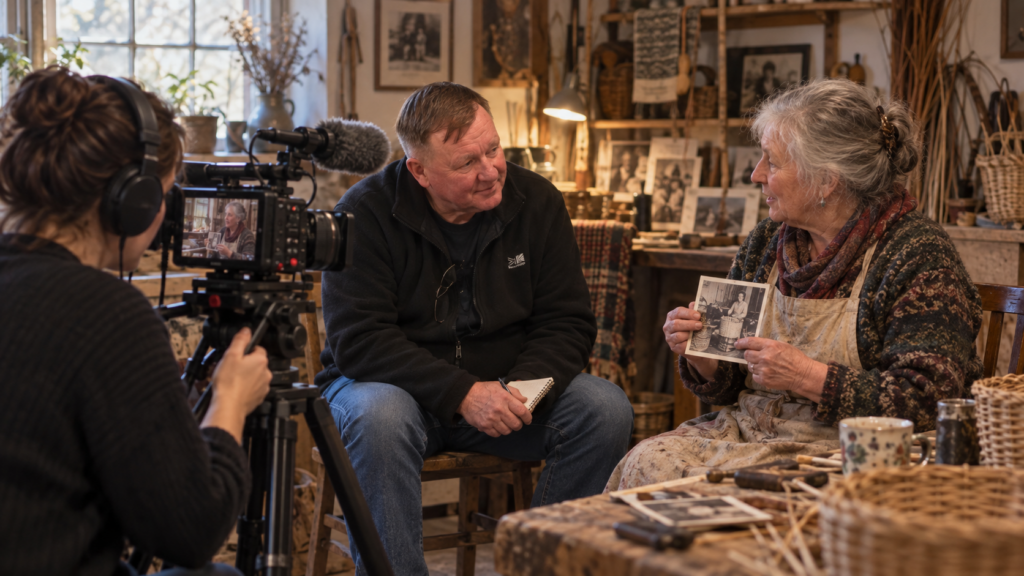
Participatory — entering the story
The filmmaker’s questions, encounters and relationships become part of the documentary. An interview or shared investigation can reveal how understanding develops through interaction.
Poetic — creating meaning through image and sound
Uses visual associations, rhythm, texture and sound to communicate an experience or atmosphere. A film about a coastal town might connect tides, working hands, empty streets and changing light without relying on a conventional presenter.
Reflexive — examining how the film is made
Draws attention to the documentary’s own construction. It may reveal decisions about filming, staging or editing and invite audiences to question how a representation of reality is created.
Performative — exploring lived experience
Uses personal, embodied experience to examine wider issues. Subjective voice, expressive imagery and creative sequences help communicate how something feels, while factual claims still need support.
Subjects and formats
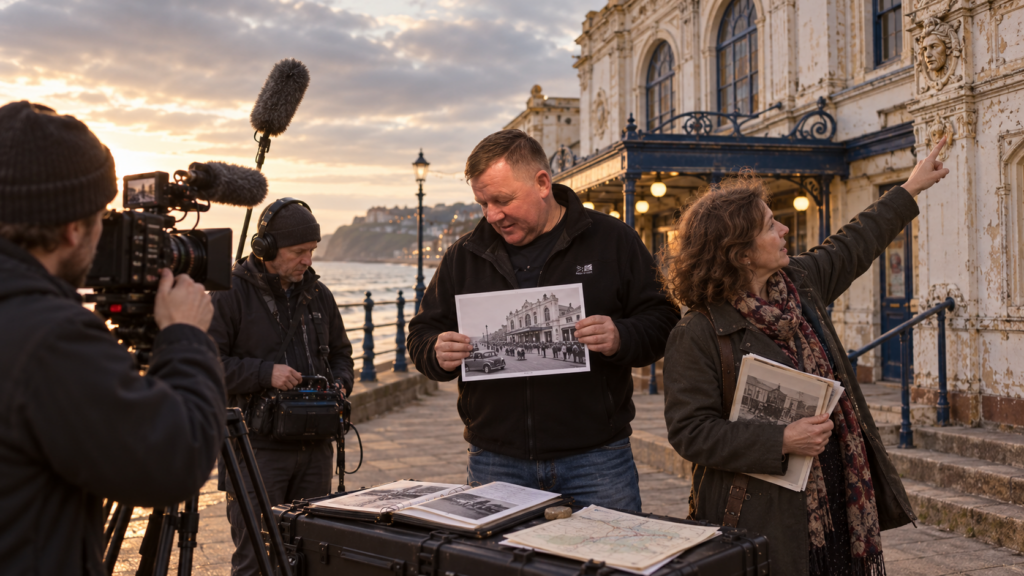
These approaches can serve many kinds of documentary:
- Historical and archival: reconstructing understanding through records, photographs, testimony and surviving locations.
- Biographical and portrait: exploring a person through their experiences, relationships and actions.
- Investigative: testing a question against evidence and considering competing explanations.
- Social and community: examining shared experiences, institutions and local change.
- Nature, science and environment: making processes and discoveries understandable.
- Arts, music and sport: following creative work, preparation, performance and achievement.
Short films, feature documentaries and series can all draw on several of these approaches.
How documentary stories are crafted
Find a focused question
Move from a broad topic to something the film can meaningfully explore. “Community filmmaking” is a subject; “What happens when first-time filmmakers attempt their first public screening?” offers people, activity and an unfolding situation.
Research before deciding the answer
Check sources, identify gaps and seek relevant perspectives. Prepare a treatment that explains the proposed film while leaving room for discoveries that challenge the original idea.
Build contributor relationships
Explain the project, intended audience and proposed use of material. Discuss boundaries and revisit consent as circumstances change. Listening and trust matter as much as technical preparation.
Capture scenes, not only statements
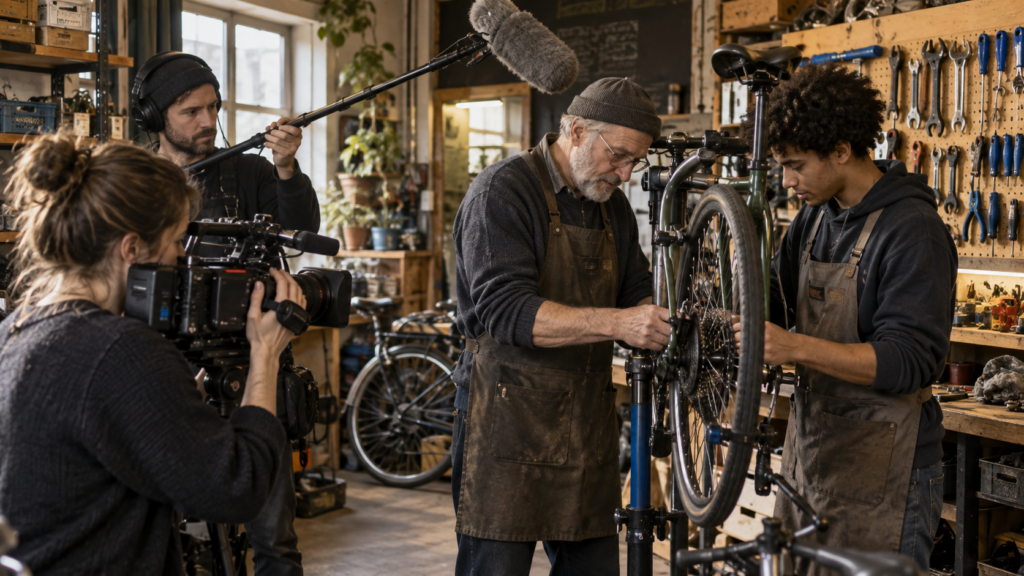
Record people doing things: preparing, deciding, working, waiting and responding. Interviews provide reflection; observed scenes let audiences experience events. Supporting footage should add relevant information rather than simply cover edits.
Develop a structure
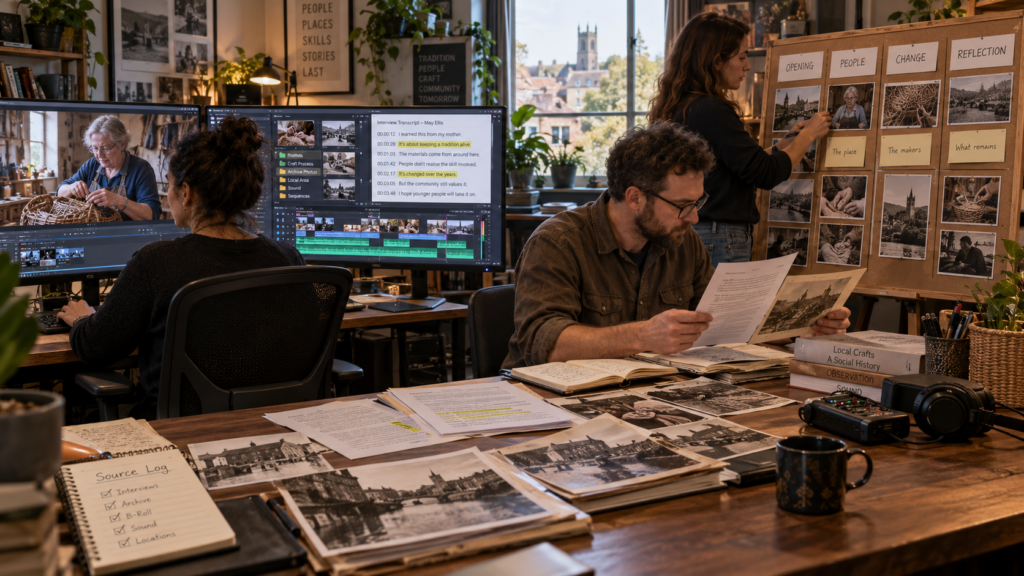
Explore chronological journeys, thematic chapters, parallel stories or an investigation built around questions and discoveries. An opening establishes interest, the middle deepens understanding, and the ending offers a meaningful outcome or reflection—even when events remain unresolved.
Discover the film in the edit
Log footage, transcribe interviews and build a paper edit. Test how scenes, testimony, archive and sound work together. Preserve the meaning of contributors’ words and avoid implying a false sequence or connection.
Check the finished story
Review factual claims, context, permissions and the effect of music and juxtaposition. Clearly distinguish reconstruction, illustration and speculation from recorded events and verified evidence.
Practical project
Create a short documentary about a local person, place, creative activity or community story.
Prepare a research outline and contributor plan, choose an approach, capture relevant scenes and sound, and edit a finished sequence. Explain what changed during production and how your decisions shaped the audience’s understanding.
Who can take part?
Beginners and developing filmmakers are welcome. Bring curiosity, a willingness to listen and an interest in stories from the world around you.
Interested in taking part?
Tell us about your interests in this subject