Build the confidence to capture clear, consistent and purposeful shots.
Camera operators turn a director’s intentions into usable footage. Working closely with the director of photography, they control framing and movement, follow performances and help maintain visual continuity across each setup.
At Optika Film Studios CIC, this practical course introduces camera operation through demonstrations, supported exercises and collaborative filmmaking.
Who is it for?
Beginners, aspiring camera operators and filmmakers who want more confidence behind the camera. No previous qualifications are required—just curiosity and an interest in making films.
Proposed course format
Six practical sessions, progressing from camera preparation to filming a short scripted scene. Learners rotate crew roles to understand how camera work connects with performance, sound and production.
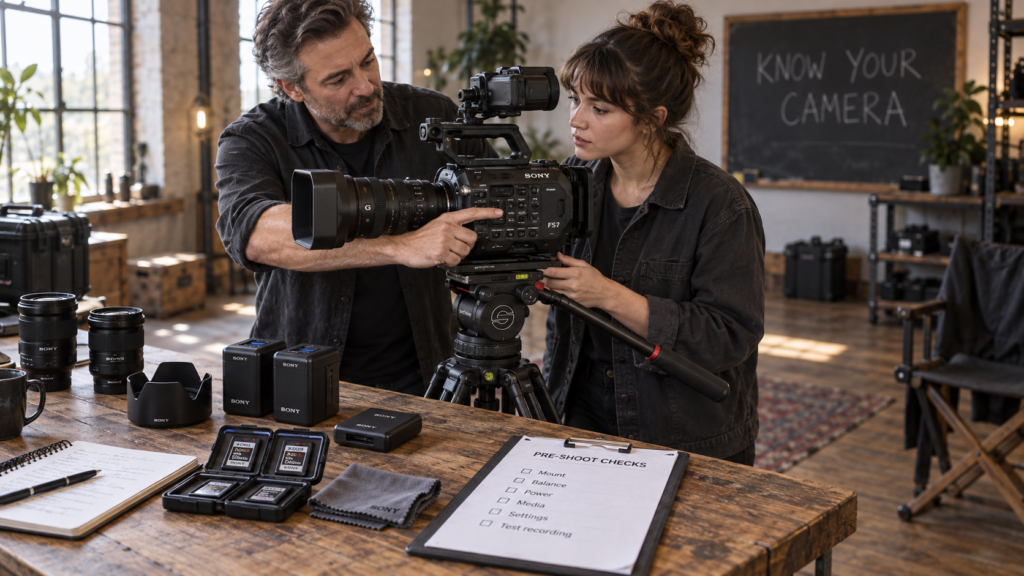
Session 1 — Know your camera
Explore camera controls, lenses, batteries, recording media and support equipment. Practise assembling a camera, balancing a tripod and completing pre-shoot checks.
Practical task: Prepare a camera kit and record a correctly framed test shot.
Session 2 — Exposure, focus and recording settings
Understand aperture, shutter speed, ISO, white balance, frame rate and resolution. Explore depth of field and practise maintaining focus as a performer moves.
Practical task: Record the same subject with different exposure and focus choices, then compare the results.
Session 3 — Composition and visual storytelling
Explore shot sizes, headroom, looking room, eyelines and screen direction. Learn how camera position changes the audience’s relationship with a character.
Practical task: Tell a simple visual story using five planned shots.
Session 4 — Camera movement and support
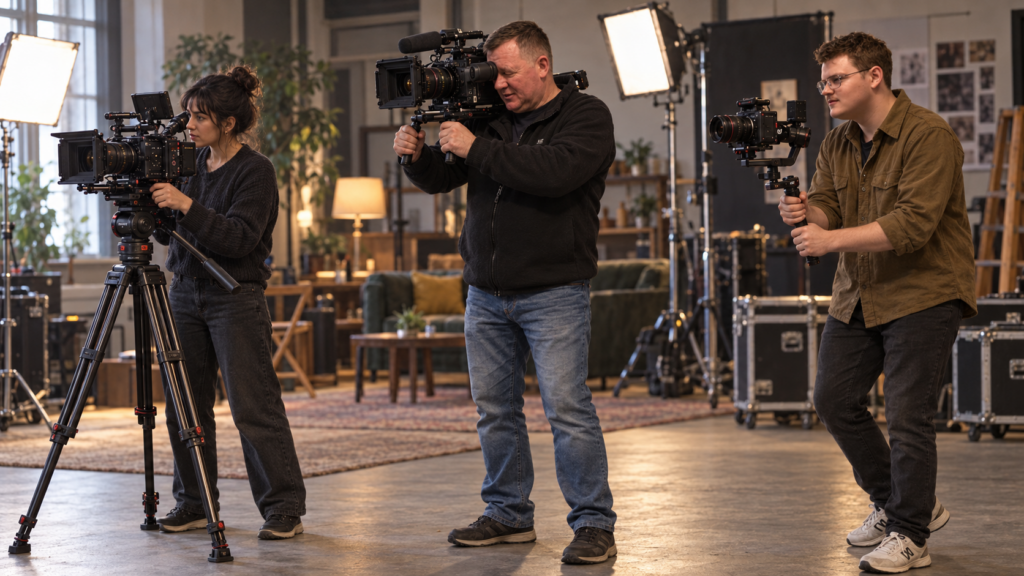
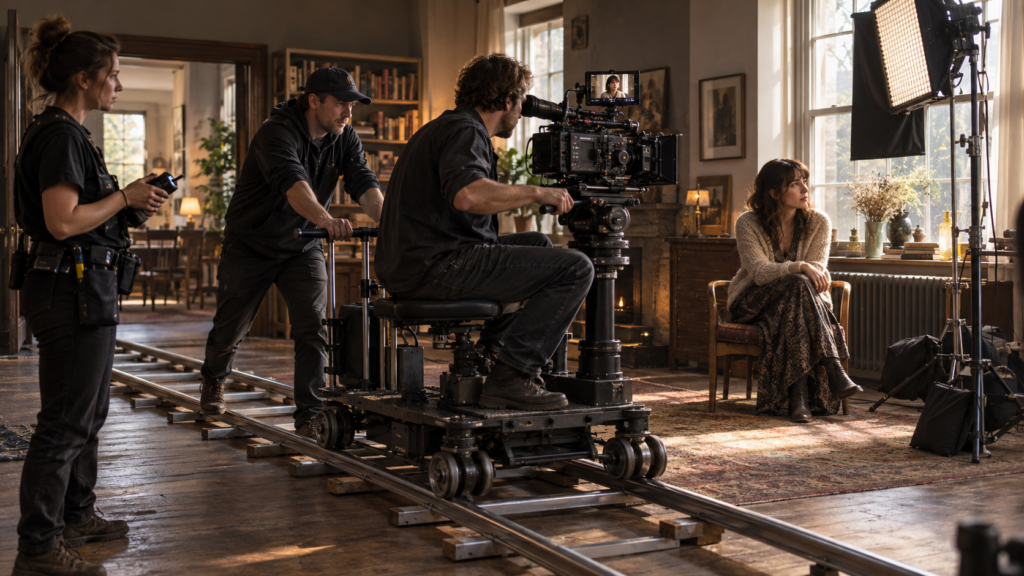
Practise controlled pans and tilts, purposeful handheld work and basic movement using suitable supports. Learn to rehearse moves, agree performer marks and keep equipment and working routes secure.
Practical task: Follow a performer through a short action while maintaining framing and focus.
Session 5 — Coverage and working with the crew
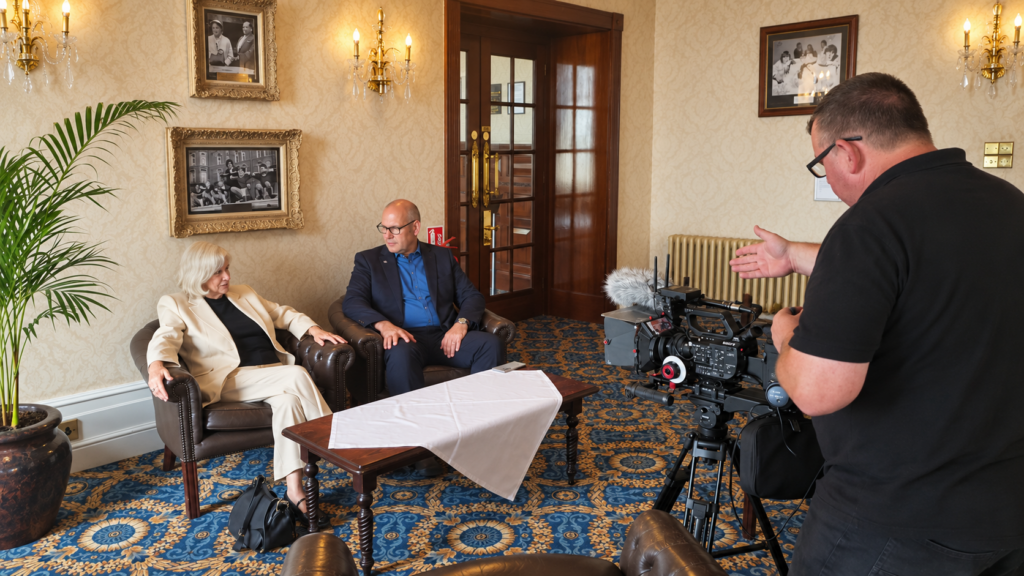
Translate a shot list into practical coverage. Explore master shots, close-ups, over-the-shoulder shots, inserts and cutaways. Practice communicating with the director, sound team, performers and script supervisor.
Practical task: Film a two-person conversation with matching eyelines and sufficient coverage for an edit.
Session 6 — Shoot, review and improve
Work as a small crew to film a short scripted scene. Rotate camera responsibilities, review takes and identify improvements in framing, focus, movement and continuity.
Practical task: Present the footage and explain how your camera choices supported the story.
Skills you will develop
- Prepare, check and pack down a camera kit.
- Choose suitable settings for an agreed production workflow.
- Control exposure, white balance and focus.
- Frame shots and carry out purposeful camera movements.
- Maintain screen direction and continuity.
- Communicate clearly and respond to direction.
- Label and hand over recorded media using an agreed procedure.
Final project
Film a short scene supported by a shot list, camera checklist and brief reflection. Feedback considers preparation, technical consistency, storytelling, teamwork and safe equipment handling.
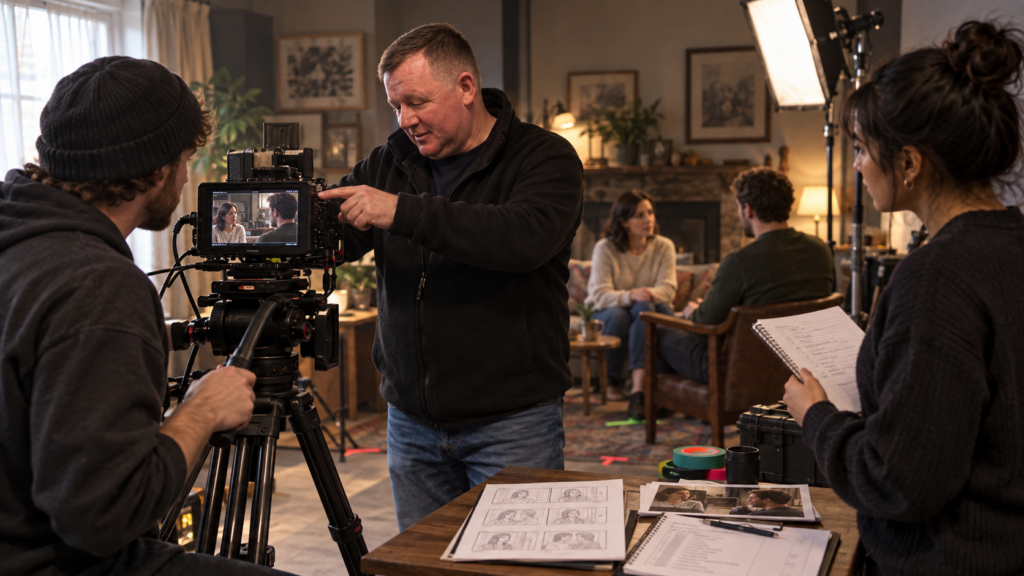
Learning together
Sessions combine explanation, demonstration, practice and constructive feedback. Participants can discuss access requirements so activities and crew roles can be planned around their needs.
Interested in getting behind the camera?
Register your interest in the Camera Operator course and tell us about your experience, interests and any support you may need.